The modern era of elite football is defined by a frantic, high-stakes impatience. Across Europe’s top leagues, the manager has become the most disposable asset on the balance sheet, a ritualistic sacrifice offered up to appease the gods of short-term returns. In the unforgiving ecosystem of the Premier League, this instability is now the **default setting**: the average tenure for a dismissed manager stands at a shockingly brief **1.42 years**. By December of the current season, the managerial carousel had already spun multiple times, demonstrating a quick-fix mentality that sees long-term planning as a liability.
Yet, amid this chaos, **Arsenal Football Club** stands as a crucial, successful outlier.
Since his appointment in December 2019, Mikel Arteta has become one of the longest-serving managers in the league a distinction that should not be overlooked. The success Arsenal now enjoys challenging for the title and developing world-class young talent is often attributed to smart recruitment or tactical evolution. However, the true, quantifiable advantage lies in the **Stability Dividend** the club earned by backing the manager through the toughest periods. The club’s faith in the **Process** was not merely a slogan; it was a fundamental commitment to a long-term structure that rivals, trapped in their cycle of firing and hiring, continue to surrender. This stability, born of patience, is now Arsenal’s most powerful competitive edge.
II. The fickle landscape: Pressure and short-termism
----------------------------------------------------
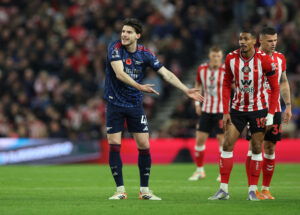
The Premier League’s revolving door is not merely a curiosity; it is a symptom of a destructive, short-termist mindset driven by colossal financial pressure. The average tenure of a manager sacked in the top flight just **1.42 years** underscores a market where patience is an extinct virtue and the fear of missing out (on European football, or simply survival) trumps long-term planning.
This instability is pervasive. Even highly successful managers are not immune, as evidenced by recent high-profile dismissals. This hyper-accelerated environment forces club boards to chase the mythical “new manager bounce” a short-term psychological lift that is rarely sustained. Research even points out that while a sacking might create a positive short-term shock effect on results, **this effect is followed by a gradual worsening of results in the long run.**
The true cost of this cycle is not just the severance pay, but the profound operational and financial waste. Each managerial change brings a new coaching staff, a new tactical blueprint, and crucially, a new transfer list. Clubs repeatedly spend large sums to sign players tailored for one manager’s system, only to have that system and those players’ utility rendered obsolete six months later when a new man arrives with a completely different philosophy. This scatter gun approach cripples wage control, inflates debt, and undermines the fundamental financial sustainability of the club.
The contrast with Arsenal’s single-minded backing of Arteta, even when the club was languishing at the bottom of the table, therefore ceases to be a sentimental choice and becomes a hard-nosed, **strategic business decision.**
III. The Arsenal advantage: The stability dividend
--------------------------------------------------
If the Premier League’s volatility is a disease, Arsenal’s project under Mikel Arteta is the hard-won cure. Their decision to back Arteta through periods that would have been terminal for any other manager was not a demonstration of blind faith, but rather a calculated, strategic investment in stability.
The core of this strategy was established by Arteta himself: **“We have to build a culture that has to sustain the rest. If you don’t have the right culture, in the difficult moments, the tree is going to shake.”**
Arsenal’s leadership understood that the club’s issues required a complete cultural reset and an institutional philosophy. This required the one resource that money cannot buy: **time**. While rivals used the transfer market to chase a short-term ‘fix’ for their managerial instability, Arsenal’s long-term commitment allowed for four critical, compounding advantages:
### **1\. Institutional cohesion and memory**
Arteta has been able to implement a cohesive philosophy from the senior team down to the academy. This stability creates a **shared knowledge and memory base** among the players and staff. Everyone understands the system, the non-negotiable, and their roles, even during moments of transition or injury.
### **2\. Efficient transfer strategy**
The stability has transformed Arsenal’s recruitment. Instead of buying players for a new manager every year, the club recruits players who fit a known, defined tactical blueprint (e.g., Declan Rice, Kai Havertz). As Sporting Director Edu said when defending the early process: **“I think you have to see the bigger picture.”** This commitment to the bigger picture meant recruiting young players who could grow _into_ the established system, a far more financially prudent strategy than the chaotic buying cycle of unstable rivals.
### **3\. Authoritative control and cultural cleansing**
Crucially, the long-term backing gave Arteta the **political capital** to make difficult, culturally cleansing decisions that a short-term manager would never dare to attempt. The highly publicised saga involving the removal of then-captain **Pierre-Emerick Aubameyang** was the defining example. This was a non-negotiable stand on culture, demanding adherence to the “non-negotiable.” Arteta could afford to make that massive, immediate financial and on-pitch sacrifice because his mandate was _cultural_ and _long-term_.
### **4\. The strength to withstand the storm**
Ultimately, the stability provided the resilience the club needed to endure the inevitable bad patches. When the “tree was shaking” in 2021, the club’s refusal to panic reinforced the very culture Arteta was building. This act of faith holding the line when the noise was loudest is the **Stability Dividend** that pays out now in the form of a resilient, unified squad.
IV. Player perspective: Growth through consistency
--------------------------------------------------
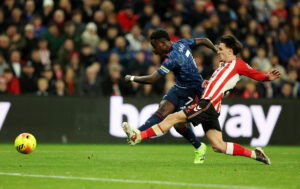
The ultimate payoff of the club’s stability is found in the development of its world-class talent. Players like Bukayo Saka, Gabriel Martinelli, and William Saliba have not just improved; they have flourished under a single, consistent management system a luxury their counterparts at rival, unstable clubs are simply not afforded.
Academic research on team dynamics confirms that **longevity of team relationships has a positive impact on performance**. This is achieved through:
### **1\. Trust in the tactical blueprint**
The players have spent years embedded in the same high-intensity structure. This consistency enables a team to develop a sophisticated ‘shared knowledge and memory base’ meaning players know not only their own role but also the predictable movements and responsibilities of every teammate. This tactical maturity allows the squad to make complex decisions at speed.
### **2\. Confidence through consistent feedback and youth trust**
The unwavering belief shown by Arteta provided a safety net for players. The commitment extends to the academy, where Arteta has demonstrated an unparalleled trust in raw youth talent. He has not only given opportunities but has placed real faith in players’ abilities by providing significant, early minutes. This includes giving league debuts to teenagers like **Ethan Nwaneri** and **Myles Lewis-Skelly**, and most recently giving **Max Dowman** his Champions League debut, making him the youngest player ever to do so for the club. These demonstrations of trust reinforce the club’s philosophy that the system can nurture and protect immense talent, regardless of age.
V. Conclusion: The long view triumphant
---------------------------------------
The disparity between Arsenal and its managerial rivals could not be starker. While Premier League clubs continue to surrender to the impulse of the quick fix, succumbing to the pressures that lead to an average dismissed tenure of just 1.42 years, Arsenal’s long-term vision has delivered the ultimate competitive edge.
The journey under Mikel Arteta was never guaranteed. It required the **political courage** to stand by the manager during crises from the bottom of the table to the decisive cultural stand taken in the Aubameyang saga. This courage was, in fact, strategic.
By refusing to panic, Arsenal gained compounding advantages: a cohesive tactical philosophy, an efficient, targeted transfer strategy, and a framework where youth development from Bukayo Saka to the Champions League debut of Max Dowman could truly thrive. The club proved that the consistent, unwavering voice of one manager, backed by the board, is infinitely more valuable than the constantly changing demands of a dozen short-term appointments.
Arsenal’s **Stability Dividend** is now paying out. The stability granted to Arteta has created a resilient, unified, and tactically mature squad capable of sustained title challenges. While rivals remain stuck on the managerial merry-go-round, perpetually wasting time and resources, Arsenal has successfully forged consistency into its most precious and sustainable asset. The long view has not just been validated; it has triumphed.