15th January 2026
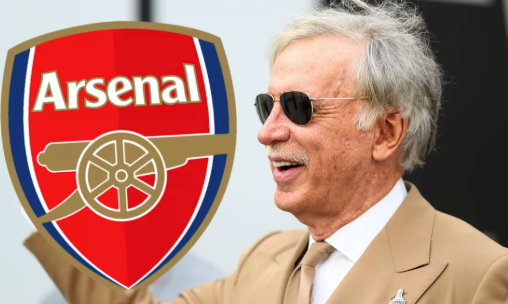
January 15 – U.S. multi-billionaire Stan Kroenke has been a quiet owner of sports franchises, but his latest move is loud and underlines just how much financial weight sits behind Arsenal FC.
The club’s majority owner has risen to the top of The Land Report’s annual ranking of US landowners after acquiring nearly one million acres in New Mexico, making him the largest private landowner in the country.
The deal is the latest addition to a vast portfolio that already includes some of the most high-profile real estate and sports assets in the world. Kroenke’s developments range from ranches in Texas and Montana to Hollywood Park in Inglewood, California, home to the $5.5bn SoFi Stadium and host of eight World Cup matches this summer.
Privately funded and expandable beyond 100,000 seats, SoFi remains the most expensive sports arena ever built and a clear example of how Kroenke approaches long-term infrastructure investment.
That approach increasingly matters for Arsenal. Since taking full control of the club in 2018 at a £1.8bn valuation, Kroenke has overseen a sharp rise in the club’s value, now estimated to be roughly double that figure and still climbing.
More importantly for supporters, he has backed unprecedented transfer spending in recent seasons. The results speak for themselves, with the Gunners reaching last season’s Champions League semi-finals, before narrowly losing to the eventual winners, Paris Saint-Germain.
This season they are in pole position to win the Premier League title for the first time in 22 years.
At the Emirates Stadium, demand for tickets continues to outstrip supply, and expansion is firmly on Kronke’s agenda. His experience delivering complex venue projects could prove valuable, but North London presents challenges that Los Angeles did not. The Emirates site is tightly constrained by residential housing, major Underground lines, and already stretched matchday infrastructure.
Any increase in capacity would require careful planning, potential design compromises, and possibly even a temporary move to Wembley. The question is how Kroenke’s scale and expertise can be translated into a solution that works for both the club and the community around it.
Contact the writer of this story, Nick Webster, at [moc.l1768466703labto1768466703ofdlr1768466703owedi1768466703sni@r1768466703etsbe1768466703w.kci1768466703n1768466703](javascript:;)