February 10, 2026 / 6:02 PM PST / CBS LA
An Orange County woman wound up in the middle of a "catfishing" romance scam that has cost another woman at least $100,000.
"I thought Walter was someone who cared about me, and he really didn't," said Jaimi, who only wanted to share her first name.
Jaimi, a divorced mother from Mission Viejo, said she wanted to protect others who are looking for love online from experiencing the nightmare she endured.
She went on Upward, a Christian dating app, last summer and met a person who quickly professed his love for her.
"He ended up sending me flowers, a whole bouquet of flowers and balloons that said 'I love you' on it after 10 days," Jaimi said.
She cross-checked the photos that the scammer sent her. After realizing that they matched a model with a different name, Jaimi confronted him.
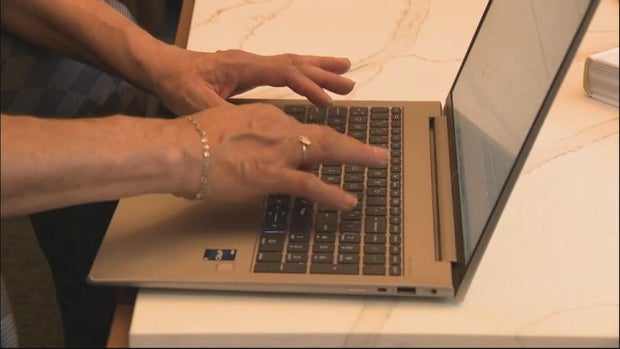
Jaimi, a divorced mother from Mission Viejo, said she was unknowingly part of a catfishing scam that cost another woman at least $100,000. CBS LA
Despite the red flags, Jaimi followed through with a plan to help him pay his employees overseas using her bank account at Schools First Credit Union.
"Jaimi served as what's called a money mule, and helped the scammer filter and launder that money from another victim to himself," fraud manager John Palmer said.
In December and January, the credit union's fraud team spotted unusual wire transfers of large sums of money into Jaimi's account, which was used to buy cryptocurrency for the fraudster. What Jaimi didn't know was that the money was coming from another Southern California woman who was also being scammed by the same person.
Both women thought the man was their boyfriend.
"Sick. Stomach is churning because of it," Jaimi said.
Palmer praised Jaimi for being truthful with his team, which helped stop the scam. Unfortunately, Palmer said the lost money, which he estimates is between $100,000-$200,000, is untraceable. He urged everyone to never share sensitive information.
"I will say that in every case of a scam, the consumer has to help the scammer take their money or access their accounts," Palmer said. "They're giving them codes that access online banking. They're giving them usernames, passwords, card numbers."
The scammer has not been caught.