The reverberations of the reported verdict of the Manchester City case have been felt much further than just the M11 postcode.
We asked commentators from across the globe for the local reaction as football fans reflect on the seismic judgment.
Spain, a country accustomed to polarisation, is almost unanimous in this case: City’s financial irregularities are a scandal and some are calling for the punishment of the century. There is no more prominent advocate of this view than La Liga president Javier Tebas. They have been cheating for more than 10 years and enjoying impunity, he has said repeatedly.
With the news now confirmed, many are questioning the moral legitimacy of some of City’s titles, particularly those won during Pep Guardiola’s tenure. Many believe that everything he achieved is now under suspicion, or at the very least tainted by the financial advantages City had at its disposal. For the most cynical, the interpretation is: “See? Pep knew something bad was going to happen and left just before it did.” With the exception of most Barcelona supporters, who remain eternally indebted to Guardiola for what he achieved at Camp Nou during his four years in charge, Spain is relishing the prospect of City’s fall from grace.
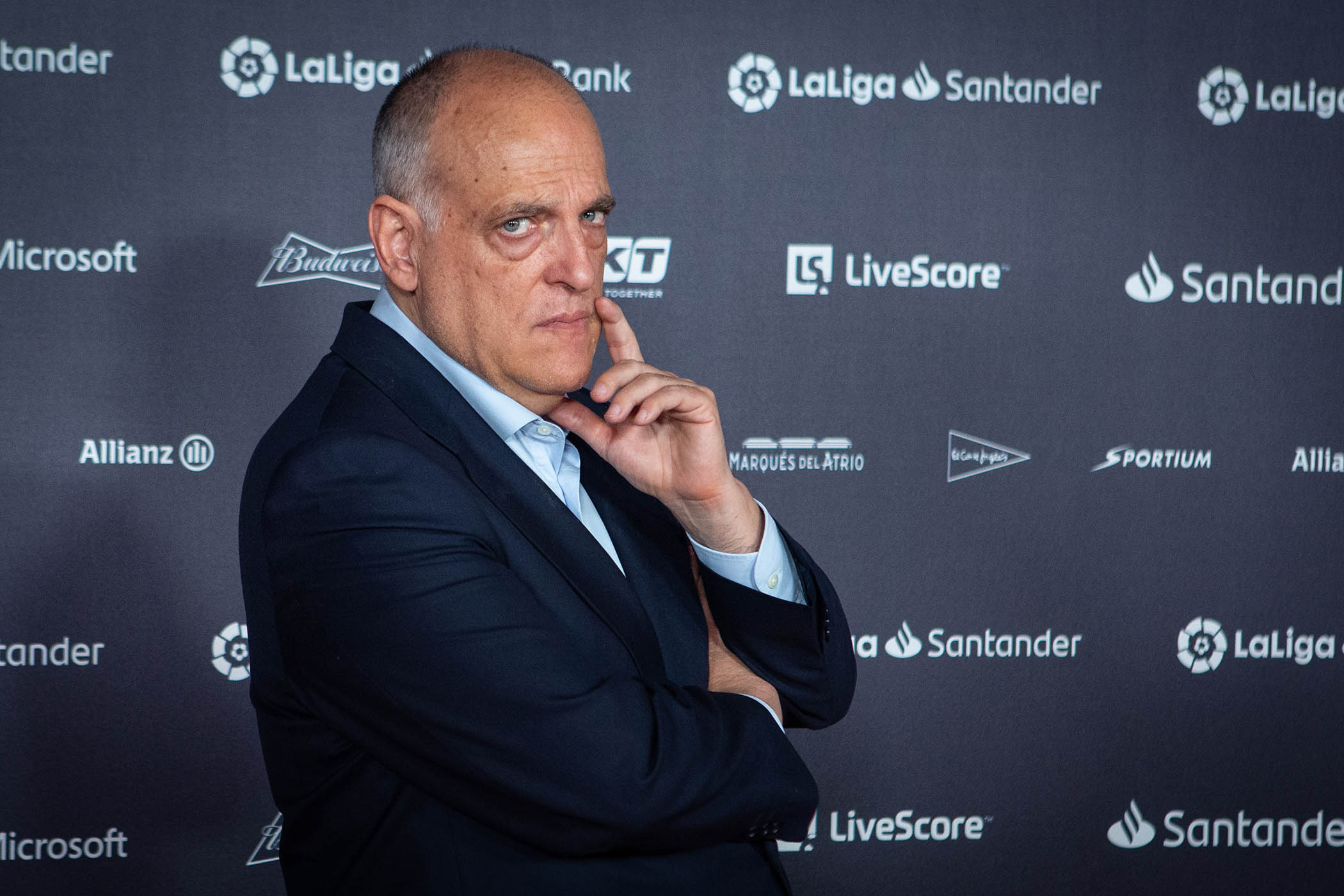
La Liga president Javier Tebas
Vindication in Germany – Mia Guethe
There is a German saying for when you’re not sure if you can believe something: “I don’t trust the roast.” Experts disagree about its origin, but the most widespread idea is that people used to say this when they were sceptical about the meat they were served. The chef might have promised lamb but served a tough cut of pork instead. This is how the guilty verdict for City feels, and there may be no country watching it as closely as Germany, long tied up in debates on whether their rules barring investors from buying clubs are still worth it.
Bundesliga clubs have long grumbled about the financial disparities in European football. The headstart that Premier League clubs in particular are granted feels like a cosmic injustice to many. It also feels irreversible, as if English football’s limitless splurging opened a Pandora’s box. So to Germans, this verdict feels too good to be true. It smells like a delicious lamb roast – but City can appeal, so it might just be pork.
In the UAE, the reaction was muted. The Saturday papers made next to no mention of the news. “This is telling,” said Simon Chadwick, a professor of Afro-Eurasian sport who advises sports companies in the Middle East.
“I think from an Abu Dhabi perspective, they’re trying to deal with it in a quiet, diplomatic fashion.”
The Abu Dhabi United Group bought Manchester City in 2008 for about £200 million and have invested billions more since. “They won’t want to lose face,” said Chadwick. “They won’t want to see any of their investments being significantly undermined.” Manchester City have become the face of the UAE worldwide for millions of football fans. The name of the Abu Dhabi airline Etihad – Arabic for “union” – has been displayed for 15 years above the stadium following a sponsorship deal. The tight association between the club and its foreign backers puts Abu Dhabi in a “tricky” position, said Chadwick. “This has the potential to be a significant international incident.”
For 34-year-old Emirati Fahad, the City controversy tells a familiar tale. “A rising superstar with great funding pisses people off,” he said. He called the charges levelled against the club “bullshit”.
Photographs by Mike Hewitt/FIFA via Getty Images, Pablo Cuadra/Getty Images