By the time he closed his eyes, a beatific smile on his face, his arms outstretched and the torrential spring rain prickling his skin, Jack Grealish had been celebrating for close to 48 hours. The party had started in Istanbul, diverted briefly to Ibiza and finally arrived, for its delirious crescendo, in Manchester.
Grealish had been at the centre of it throughout. Alone of his Manchester City team-mates, he had spent the first night in full kit, performing karaoke with Erling Haaland at 6am while still wearing the mud-spattered shorts in which he had just lifted the Champions League.
In Ibiza, 36 hours in, he had found it so difficult to walk that he had been offered a wheelchair to leave a nightclub; in the end, he leaned instead on Kyle Walker. In Manchester, wearing a high-vis vest, he had vodka poured down his neck by Kalvin Phillips. On the bus, with thousands of fans lining the streets to greet the club’s treble-winners, Haaland drenched him in champagne.
Grealish relished every second of it. At some point during the parade, he wandered to the back of the bus. By that stage, he was topless, his trousers slowly slipping off his hips to reveal his Calvin Klein underwear. Unselfconsciously, he closed his eyes and raised his arms.
Travelling on the bus behind, the club’s photographer, Lexy Ilsley, captured the moment. In her image, Grealish is uncommonly beautiful: perfectly honed body, boy-band looks, hair slick with rain. He conveys a sense not so much of joy or happiness or triumph, but of absolute, rock-and-roll bliss, a feeling of complete satisfaction. The photo, naturally, went viral.
It was known, instantly, as Grealish the Redeemer.
A few days later, Grealish – by his own admission still just a touch hungover – reported for England duty. He was excused the first game, against Malta, and then appeared as a second-half substitute in a walkover against North Macedonia at Old Trafford. A Manchester City player on hostile territory, he was given the loudest cheer of the night.
That was not solely because of the scale of his celebrations, of course, but it will not have hurt. The tone of the coverage of Grealish’s exploits – to borrow the tabloid term – over that 2023 weekend is striking. The Sun, not ordinarily especially laissez-faire when it comes to footballers letting their hair down, called the incident with the wheelchair “hilarious”.
Possibly even more surprisingly, the Telegraph, that bastion of rectitude, ran a feature analysing the midfielder’s “48-hour bender”, assigning each moment a “Grealish rating”. It is hard to imagine the reaction being so light-hearted had Raheem Sterling or Marcus Rashford, say, been doing the partying.
Grealish’s hedonistic streak, though, has long been part of his appeal. He has always had a throwback quality as a player, formed part of a tradition that Britain seems to have forgotten it has: the untamed playmaker, the grinning virtuoso, a paradigm that stretches back through Paul Gascoigne and Stan Bowles, Jim Baxter and George Best.
More than that, though, he fits an archetype innately familiar to broader British culture. He is the party animal – the member of any friend group who will, at some point, be described unironically as a “legend” – but who will also, quietly, donate £10,000 to an Everton fan with terminal cancer, and make a point of describing his younger sister, Hollie, who was born with cerebral palsy, as his “best friend”. He is the jack-the-lad, the rascal with the heart of gold.
Grealish has never made any attempt – nor seen any reason – to pretend he is anything else. He spoke openly, after that weekend in 2023, of wanting to revel in the best moment of his career; he told Sky Sports last year that he felt he should be able to “live my life and enjoy myself”.
As much as he is a character we recognise, a figure we appreciate, though, his is also a story arc that we know does not always have a happy ending.
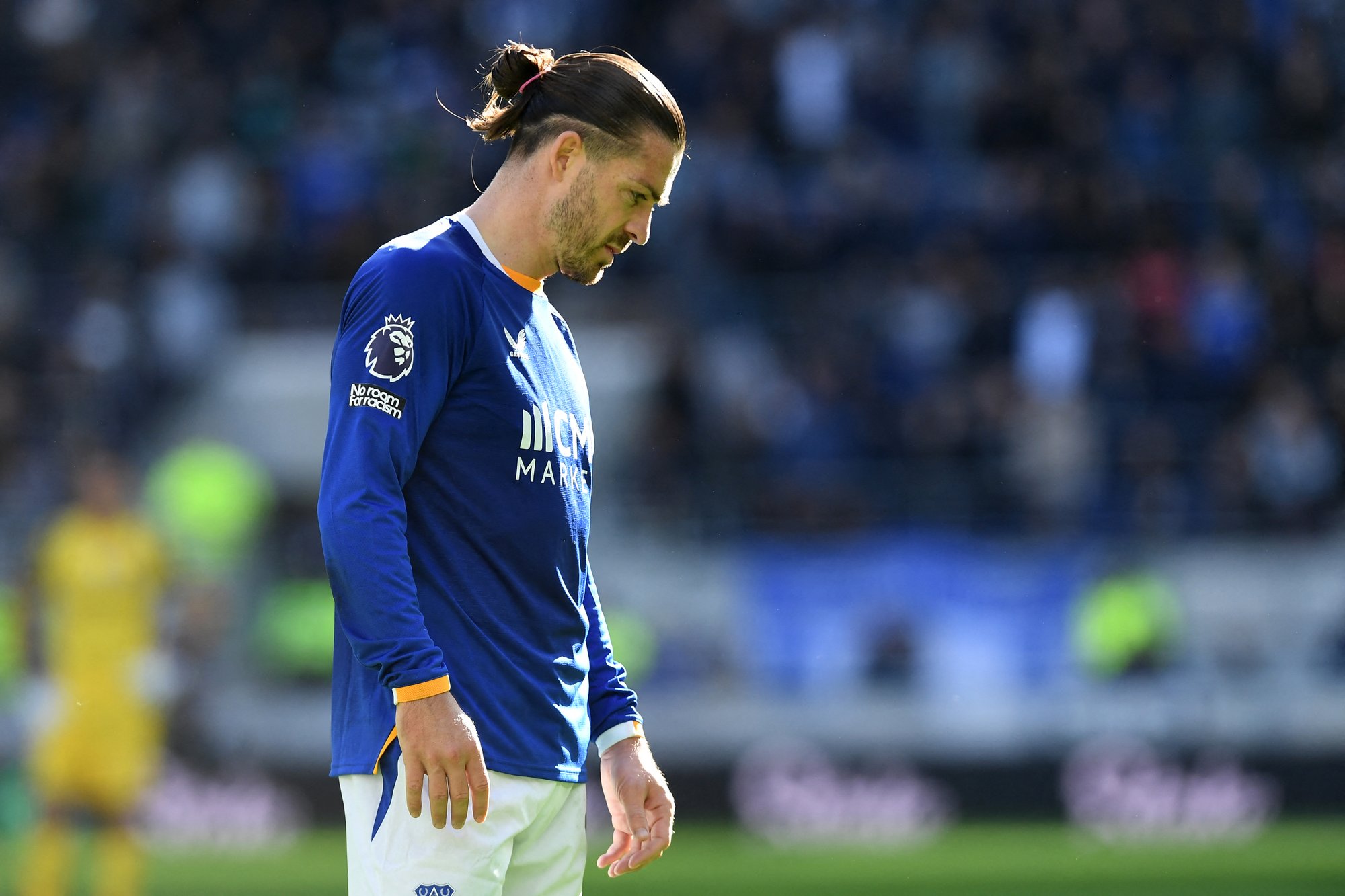
Out of the picture: Grealish has been omitted from Everton’s squad since a disciplinary breach
Last week, Grealish was omitted from Everton’s squad for the Carabao Cup game with Newcastle because of an “unauthorised absence from training”. What David Moyes described as a “breach of club discipline” meant he also missed the Premier League win against the same opponents on Monday and has been ruled out of a return against Coventry City tonight. The international break follows.
Both Moyes and the club have insisted the precise nature of his transgression will remain confidential, as it should; from the outside, there have been euphemistic whispers of concerns over his “lack of professionalism”, suggestions that this may not have been the first time he has failed to meet his obligations during his year or so on Merseyside.
To his credit – and presumably despite his own personal disappointment – Moyes has insisted this does not need to be the end of Grealish’s Everton career, that he can be reintegrated into his plans, that the door is not yet closed.
A man of devout faith, Moyes seems determined that Grealish can be redeemed. The defining image of Grealish’s career is one of unadulterated bliss.
It would, more than anything, be a matter of deep sadness if the coda was quite so bleak.
Photograph by Lexy Ilsley/Manchester City FC/Getty Images, Peter Powell/AFP/Getty Images