By **Flava**
May 26 2026
For Arsenal supporters, the wait has always been as much about identity as it has been about silverware. Twenty two long years have passed since the Invincibles etched their names into footballing folklore in 2003/04, going unbeaten and redefining excellence in English football. Since then, a generation of fans has grown up without witnessing their club lift the Premier League trophy, until now.
At long last, Arsenal are champions of England again.
This isn’t just a title win. It’s a release. It’s vindication. It’s the end of a narrative that has hung over the club, the fans, and even the stadium itself like a stubborn cloud. For those who lived through the Highbury glory years, this triumph reconnects past and present. For others, it is their first taste of what it truly means to support Arsenal at the very top.
**The Long Road Back**
To properly appreciate this moment, you have to remember where Arsenal have been.
The post-Invincibles years were defined by transition. The move from Highbury to the Emirates Stadium in 2006 brought financial stability but competitive sacrifice. While rivals spent heavily, Arsenal tightened belts. Champions League qualification became the benchmark, not titles. Seasonal optimism gradually turned into a familiar script: promise, collapse, and a quiet drift out of contention by spring.
There were bright moments the FA Cup wins, the emergence of players like Fabregas, Van Persie, and later Alexis Sánchez—but none of it replaced the hunger for league dominance. Arsenal were no longer feared; they were respected but manageable. For a club of such stature, that stung.
**The Wenger Departure and Identity Crisis**
Arsène Wenger’s departure in 2018 marked the end of an era—but also plunged the club into uncertainty. His influence had been all-encompassing, and replacing him was never going to be straightforward.
The years that followed were turbulent. Unai Emery’s tenure promised tactical evolution but ultimately lacked consistency. Mikel Arteta’s early spell showed flashes of promise, including an FA Cup triumph, but also exposed the fragility of a squad in need of deep rebuilding. Arsenal slipped out of the Champions League places, then Europe entirely. For many fans, it felt like the club had lost its identity.
And yet, something was quietly being built.
**The Arteta Revolution**
Arteta’s Arsenal was not an overnight success—it was a project in the truest sense. Painful defeats, questionable decisions, and moments of doubt tested the patience of supporters. But what set this era apart was clarity.
Arteta imposed a philosophy. Recruitment became purposeful rather than reactive. Young, hungry players—Saka, Martinelli, Ødegaard—were trusted and developed. The culture shifted. Standards were raised.
Fans could see it, even when results didn’t always reflect it.
There was heartbreak along the way. Near-misses. Title challenges that faded too soon. But each season, Arsenal grew stronger—mentally as much as tactically. The gap to the top shrank, and belief returned.
**The Season That Changed Everything**
And now, the breakthrough.
This title-winning campaign wasn’t just about talent; it was about resilience. Arsenal showed steel when it mattered turning draws into wins, surviving tough away fixtures, and standing firm under relentless pressure from rivals.
The Emirates, once criticised for lacking atmosphere, became a fortress. The connection between fans and team rebuilt over years of shared struggle was now a genuine weapon. Every tackle, every goal, every late winner carried the weight of two decades of longing.
There were defining moments: comebacks that felt like destiny, victories against London rivals and a title challenge built on an elite defence.
This wasn’t a team folding under pressure. This was a team embracing it, unlike this forum as we all had meltdowns on multiple occasions.
**The Fans: The Heart of It All**
More than anything, this title belongs to the supporters.
They endured the banter years, the memes, the constant comparisons to rivals. They debated tactics, questioned decisions, and at times lost faith—but many never walked away. They stayed, season after frustrating season, hoping that one day the pieces would fall into place.
For those who travelled the country watching near misses. For those who defended the club in pubs, online forums, and group chats. For those who kept turning up even when belief was hard to find this moment is theirs.
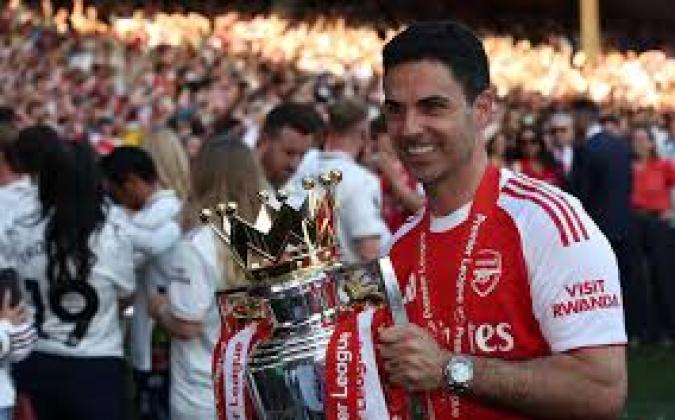
You can see it in the celebrations: raw emotion, disbelief, tears. This is what football is about.
**Closing the Circle**
Winning the Premier League again doesn’t erase the struggles of the past 22 years but it reframes them. The journey now has meaning. The setbacks become chapters in a story that has finally reached its long-awaited climax.
And perhaps that’s why this title feels different.
It’s not just about being the best team in the league. It’s about restoration. About proving that Arsenal Football Club belongs among the elite—not just historically, but right now.
The challenge, of course, is to stay there. But that is for tomorrow.
Today is for celebration.
Attacks win hearts but defences win titles.
Arsenal: Back on Top
Discussion started by Arsenal Times , 26/05/2026 10:36
Arsenal Times
26/05/2026 10:36
What do you think? You can have your say by posting below.
If you do not already have an account [Click here to Register](http://www.thefootballnetwork.net/boards/register/s378.htm).
Sorry, only registered users may post in this forum.