They flocked in their thousands to St James’ Park, that hallowed cathedral on the hill, a sea of black and white. Some wore thawbs and shemaghs, traditional Saudi dress; others waved the Gulf state’s flag. Truer to local form, still others were shirtless, answering the rallying cry on social media – #cans – with gusto.
It was 7 October 2021 and Newcastle United fans had something to celebrate. Their club was in the relegation zone but that did not matter. Not right now anyway. Newcastle had just been bought by a consortium dominated by Saudi Arabia’s Public Investment Fund (PIF), ending Mike Ashley’s miserable 14-year tenure. (Sports Direct signs were soon torn down from the stadium’s facade and dumped in a skip.) Just like that, Newcastle had the richest owners in world football. “We take over now… there’s nothing stopping us,” one fan said. “This is the best day of my life ever.”
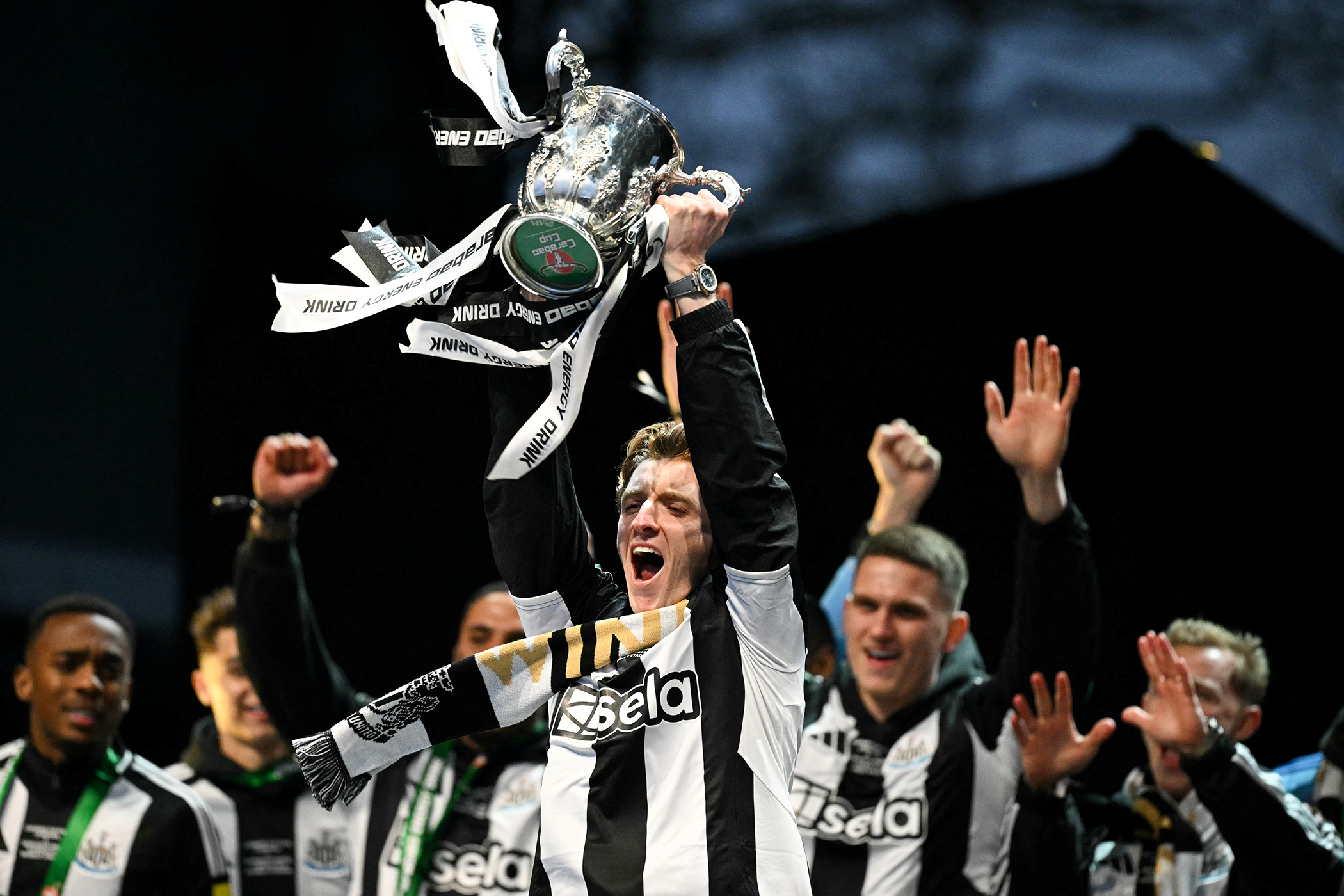
Much has changed in the five years since. In his first full season, Eddie Howe returned Newcastle to the Champions League, where they dismantled Paris Saint-Germain 4-1 on a night of delirium at St James’ Park. In 2025 came what generations of supporters had spent their lives waiting for: Newcastle’s first major trophy in 56 years, the EFL Cup. After decades of false dawns, Tyneside finally had its day in the sun.
Another Champions League campaign followed last term, Newcastle reaching the knockout stage for the first time. Yet they slumped to 12th in the league, their lowest finish under PIF. Progress is seldom linear, but Newcastle have not kicked on in the way their more ambitious fans had hoped they would five years ago.
The Premier League’s financial rules have made it harder to disrupt the established order. The apple cart now sits on firmer ground. Newcastle argue these spending restrictions entrench the existing elite and lock out aspirational upstarts like themselves. Manchester City’s guilty verdict suggests the rapidity of their rise was only possible by circumventing the rules. But in the age of state ownership, allowing clubs to spend limitlessly is a recipe for disaster. Football relies on a degree of competitive balance which is harder to find when some clubs are bankrolled by sovereign wealth funds.
Having lost Alexander Isak last year, this summer brought the departures of Anthony Gordon, Bruno Guimarães and Sandro Tonali – a brutal reminder of Newcastle’s place in the food chain. The cumulative effect proved too much for Howe, who resigned in July. His successor Matthias Jaissle has had a mixed start.
If Newcastle fans’ frustration with their financial fetters is out in the open, lurking beneath the surface is a concern that the club is no longer a Saudi priority. Plans for either a new stadium at Leazes Park or a redeveloped St James’ Park have stalled. Only in August did the club agree to purchase a site for a new training ground, not due to open until 2029. Such investments would both boost Newcastle’s status and afford them more wiggle room in the transfer market, but as things stand the club’s core infrastructure is broadly unchanged from the Ashley era.
If five years is a long time in Premier League football, it is even more so in the Middle East. Even for die-hard Newcastle fans, the takeover is no longer the first event that comes to mind when thinking about 7 October. The horrific events of that day in 2023 marked the start of the war in Gaza, plunging the region into chaos. Saudi Arabia has not escaped the fallout.
Soon after 7 October 2023, tentative talks on the normalisation of Saudi relations with Israel were suspended. A fragile peace process between Riyadh and the Houthis, an Iranian ally fighting the Saudi-backed government in Yemen, was derailed. Iran itself subsequently launched attacks on Saudi Arabia, while the Houthis are currently menacing the kingdom with drone and missile strikes. Tensions with the UAE are growing. The US is no longer such a reliable security guarantor.
In such an environment, its vast operation is being recalibrated. PIF is withdrawing its funding of LIV Golf, an audacious attempt to usurp the PGA tour. Saudi Arabia has pulled out of hosting the 2029 Asian Winter Games and abandoned a mooted bid for the 2035 Rugby World Cup. The Saudi Arabia Snooker Masters was binned two years into a decade-long deal. This is not a complete retrenchment: the kingdom will stage the 2034 World Cup, the Saudi Pro League continues to receive investment, and PIF retains interests in boxing, tennis and Formula 1. But Newcastle supporters would be forgiven for feeling uneasy about the direction of travel.
Rewatch those videos from the takeover celebrations and, for every fan imagining an imminent ascent to the upper echelons of European football, there is another simply yearning for the restoration of pride to the club and the city. So unpopular was Mike Ashley that his departure would have been cheered regardless of the buyer. Under Ashley, Newcastle fans expected little and usually got less. You will not find anyone at St James’ Park who pines for those days.
Yet Newcastle now have a different problem: their fate is tied to the policy preferences of an authoritarian state with a poor human rights record. Riyadh, not Tyneside, is ultimately where the most consequential decisions about the club’s future are made. The past five years have been a qualified success for Newcastle. What the next five hold is anyone’s guess.
Photographs by Daniel Chesterton/Offside via Getty Images; Oli Scarff/AFP via Getty Images